


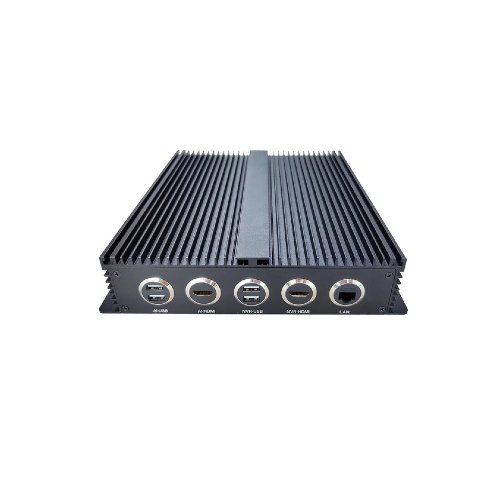
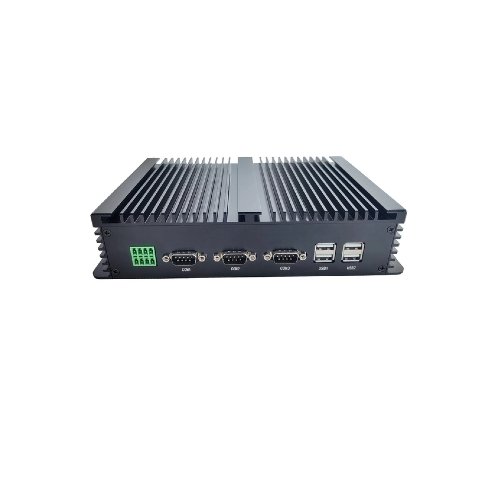
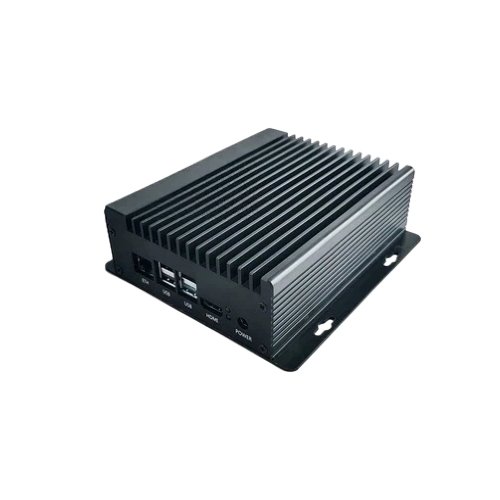
| AIBOX SP-500X | |
| Processador | Rockchip RK3568, arquitetura ARM, 4 núcleos, até 2,0 GHz |
| GPU | Mali G510 MC4 |
| NPU | 1Tops(INT8) |
| RAM | Partículas LPDDR4/4X de 4G |
| Memória | 1 X EMMC de 32 G, com expansão integrada para cartão TF, conforme especificado de fábrica |
| Vídeo | 1 porta HDMI |
| Saída de áudio | 1x ∮3,5 mm |
| Rede | 1x RJ45 10/100/1000 Mbps |
| Wi-Fi | 1 x Wi-Fi integrado na placa, 1 x 4G (configurado a pedido) |
| USB | 2 portas USB 2.0; 1 porta USB 3.0 |
| Outras interfaces de extensão | 1 conjunto de terminais Phoenix de expansão de E/S de 10 pinos |
| Entrada de energia | DC 12V 2A |
| Tamanho | 169 mm (largura) * 94 mm (profundidade) * 42 mm (altura) |
| Sistema | Ubuntu 22.04 LTS*4 |
| Ambiente de trabalho | 0~50 ℃, 10%~90% sem condensação |
| Condições de armazenamento | -20~70 ℃, 5%~90% sem condensação |
| Capacidade de acesso | Este dispositivo pode ser ligado a 1 canal de 4 milhões, 2 canais de 1080p, 3 canais de 720p ou 4 canais de vídeo D1 para análise em tempo real com IA |
| N.º do modelo | descrição |
| SP-5001 | 1 processador/4 GB de LPDDR4/32 GB de eMMC/2 portas USB/1 porta HDMI, acesso a vídeo de 1 400 w pixels com análise em tempo real |
| SP-5002 | 1 processador/4 GB de LPDDR4/32 GB de eMMC/2 portas USB/1 porta HDMI, acesso a 2 fluxos de vídeo com 1080p de resolução e análise em tempo real |
| SP-5003 | 1 processador/4 GB de LPDDR4/32 GB de eMMC/2 portas USB/1 porta HDMI, acesso a vídeo com 3 canais de 720p para análise em tempo real |
| SP-5004 | 1 processador/4 GB de LPDDR4/32 GB de eMMC/2 portas USB/1 porta HDMI, acesso a vídeo com 4 píxeis D1 para análise em tempo real |
| Cenário de aplicação | ||
| Não | Item | Descrição |
| 1 | Capacidade de reconhecimento de categorias de objetos | Pessoas, indivíduos caídos, fumadores, óculos, mochilas, cintos de segurança, roupa refletora, chapéus, gorros de cozinheiro, capacetes de segurança, telemóveis, máscaras, malas de mão, buracos na estrada, rostos mascarados, vistas frontais do rosto, fotos de perfil, mãos levantadas, facas, armas de fogo, paus, carros, bicicletas, motas, carrinhas, autocarros, miniautocarros, comboios, sinais de táxi, escavadoras, camiões basculantes, camiões basculantes, camiões de contentores, camiões de resíduos de construção, aviões, pipas, cães, gatos, gado, cavalos, pássaros, ratos, baratas, lagartixas, malas, caixas de embalagem, mãos, triciclos, cadeiras de rodas, chamas, colunas de fumo, cobras e mais de 200 outras categorias de objetos comuns |
| 2 | Detecção de fios misturados | Esta regra de cálculo traça uma linha no vídeo para especificar a categoria do objeto de vigilância. Quando o objeto de vigilância ultrapassa a linha, o sistema deteta-o e aciona um evento de captura. Se o objeto permanecer na linha durante um longo período de tempo, é acionado um evento de captura a cada N segundos, e o utilizador pode especificar qual o objeto ou quais as várias categorias a detetar
Esta regra de contagem é normalmente utilizada para detetar a passagem de um objeto, como pessoas que atravessam limites, veículos que entram e saem, animais que entram e saem, etc. |
| 3. | Detecção da linha AB | Esta regra de cálculo traça duas linhas no vídeo para especificar a categoria do objeto de vigilância. Quando o objeto de vigilância atravessa a linha A e, em seguida, a linha B, o sistema deteta o evento de captura; caso contrário, não aciona o evento
Esta regra da lei do movimento é normalmente aplicada a um objeto que requer uma determinada direção de movimento, como pessoas que atravessam fronteiras, veículos que entram e saem, animais que entram e saem, que circulam em sentido contrário, que não circulam na direção indicada, etc.
|
| 4 | Detecção de retenção de objetos | Esta regra de cálculo desenha uma área de controlo retangular ou poligonal no vídeo e define que um determinado objeto permaneça nessa área de controlo durante um longo período de tempo (definido como superior aos N segundos especificados), gerando, em seguida, um evento de captura
Estas regras são normalmente aplicadas em casos de alertas de perímetro, infrações de estacionamento de veículos e pessoal a circular sem autorização |
| 5 | Detecção regional de intrusões | Esta regra de cálculo desenha uma área de controlo retangular ou poligonal no vídeo e especifica que um determinado objeto atravessa essa área de controlo, rastreia-o e gera um evento de captura
Estas regras contabilísticas são normalmente aplicadas aos alertas de perímetro |
| 6 | Objeto removido da deteção | Esta regra de cálculo traça uma área de controlo retangular ou poligonal no vídeo e define que deve existir um objeto nessa área de controlo. Se o objeto não for detetado dentro do intervalo de tempo definido, será gerado um evento de captura
Estas regras contabilísticas são normalmente aplicadas à segurança do pessoal ou dos guardas fora de serviço e à guarda de objetos de valor |
| 7 | Entre na área AB para deteção | Esta regra de cálculo define duas áreas no vídeo e especifica a categoria do objeto de vigilância. O sistema deteta quando o objeto de vigilância passa pela área A e, em seguida, pela área B, e aciona o evento de captura; caso contrário, não aciona o evento de captura
Esta regra do código da estrada aplica-se normalmente ao movimento de um objeto que não respeita o sentido de circulação, como pessoas que atravessam a faixa de separação, veículos que mudam de faixa ilegalmente, que não circulam no sentido indicado ou que circulam em sentido contrário, etc. |
| 8 | Detecção de aglomerações | Esta regra de cálculo delimita a área no vídeo e, quando o número de pessoas nessa área excede N, é gerado um evento instantâneo de aglomeração |
| 9 | Detecção de congestionamento de veículos | Esta regra de cálculo delimita a área no vídeo e define que o número de veículos nessa área deve ser superior a N, gerando, em seguida, o evento de deteção de congestionamento de veículos |
| 10 | Estatísticas de fluxo regional | Esta regra de contabilização delimita a área no vídeo e regista as pessoas que entram nessa área. Quando as pessoas saem da área, é gerado um evento de contagem de capturas
Estas regras contabilísticas são aplicadas às estatísticas demográficas regionais |
| 11 | Alguém caiu | Esta regra de cálculo define a área no vídeo e monitoriza as pessoas que entram nessa área. Quando uma pessoa entra nessa área, é gerado um evento de captura
Estas regras são normalmente aplicadas a lares de idosos, comunidades e prestadores de cuidados, com o objetivo de alertar para o risco de quedas. |
| 12 | Detecção de objetos imóveis [Guarda a dormir no portão] | Esta regra de cálculo delimita a área no vídeo e monitoriza as pessoas que entram nessa área. Quando as pessoas estão paradas, é gerado um evento de captura. Esta regra de contabilização é normalmente utilizada para identificar se um guarda/vigilante está a dormir ou não |
| 13 | Detecção de incêndios | Esta regra de cálculo delimita a área no vídeo e gera um evento de captura quando surge uma chama ou uma coluna de fumo na área controlada
Estas normas de segurança contra incêndios são normalmente aplicadas a locais sujeitos a riscos de incêndio |
| 14 | telefone | Esta regra de cálculo delimita a área no vídeo e identifica o evento de captura quando as pessoas fazem chamadas na área controlada
Esta regra de cálculo é normalmente utilizada na indústria petroquímica para evitar que a corrente das comunicações sem fios provoque um incêndio durante uma chamada telefónica; e para evitar que, em algumas áreas de segurança da produção, ocorram acidentes de segurança devido a chamadas telefónicas efetuadas pelos funcionários |
| 15 | Ausência de identificação no capacete de segurança | Esta regra de cálculo delimita a área no vídeo e identifica o evento de captura quando o pessoal na área de controlo não usa capacete de segurança
Estas regras são normalmente aplicadas em estaleiros de construção e em oficinas de segurança para impedir que os trabalhadores utilizem capacetes de segurança em caso de acidentes |
| 16 | Detecção rápida de objetos em movimento | Esta regra de cálculo delimita a área no vídeo e identifica o evento de captura quando o pessoal na área controlada se desloca rapidamente
Esta regra contabilística é normalmente aplicada nas prisões para alertar atempadamente quando alguém se desloca rapidamente |
| 17 | Aviso sobre reconhecimento facial na lista negra | Esta regra de cálculo delimita a área no vídeo e identifica se as pessoas presentes na área de vigilância constam da lista negra. Caso constem da lista negra, será gerado um evento de deteção e será emitido um aviso atempado para notificar o pessoal de segurança a fim de que tomem as medidas necessárias
Esta regra contabilística é normalmente aplicada a unidades ou comunidades, ou ao controlo de segurança pública, para detetar atempadamente o pessoal incluído na lista negra, de modo a que o pessoal responsável possa tomar as medidas necessárias |
| 18 | Os peões estão organizados | Este algoritmo delimita áreas no vídeo e monitoriza e identifica se as pessoas que entram nessas áreas estão a usar capacetes de segurança, a conduzir veículos elétricos de duas rodas, a andar de bicicleta, a usar chapéus, a segurar telemóveis, a fumar, viradas para a frente, a andar de triciclo, se são homens ou mulheres (reconhecimento facial), o género (reconhecimento facial), se transportam malas ou se seguram bagagem |
| 19 | Contar o número de pessoas que entram e saem | Esta regra de contagem consiste em traçar duas linhas no vídeo, nomeadamente a linha A e a linha B. Quando as pessoas se deslocam da linha A para a linha B, é acionado um evento de contagem do fluxo de pessoas. É normalmente utilizada em locais onde estão disponíveis estatísticas de contagem do fluxo de pessoas por direção. |
| 20 | Não se deteta a luva | Esta regra de cálculo delimita a área no vídeo e identifica o evento de captura quando o pessoal na área controlada não usa luvas
Esta regra geral é normalmente aplicada a situações em que o uso de luvas é obrigatório, para evitar que os funcionários não as utilizem, o que pode comprometer a higiene ou dar origem a outros incidentes de segurança |
| 21 | Detecção de fumo | Esta regra de cálculo delimita a área no vídeo e identifica o evento de captura quando uma pessoa está a fumar na área controlada
Estas normas de segurança contra incêndios são normalmente aplicadas a locais sujeitos a riscos de incêndio |
| 22 | Identificada uma pessoa com uma faca | Esta regra de cálculo delimita a área no vídeo e, quando forem detetadas pessoas a segurar facas na área controlada, irá gerar um evento de deteção e emitir um aviso atempado
Esta regra contabilística é normalmente aplicada à vigilância de segurança no campus |
| 23 | Não foi detetada nenhuma máscara | Esta regra de cálculo delimita a área no vídeo e identifica o evento de captura quando a pessoa que se encontra na área controlada não usa máscara
Estas regras são normalmente aplicadas na cozinha ou noutras situações de trabalho em que é obrigatório o uso de máscaras, para evitar que os funcionários não as utilizem, o que pode afetar a higiene da cozinha ou dar origem a outros incidentes de segurança |
| 24 | Não há identificação do chapéu de chef | As regras do algoritmo delimitam a área no vídeo e identificam o evento de alerta quando o pessoal na área controlada não estiver a usar um chapéu de cozinheiro
Estas regras são normalmente aplicadas na cozinha para impedir que os funcionários não usem o chapéu de cozinheiro, o que pode afetar as condições de higiene da cozinha |
| 25 | Reconhecimento facial de pessoal estrangeiro | A regra do algoritmo identifica a área no vídeo e gera um evento de captura quando se deteta que o pessoal presente na área controlada não é uma pessoa da empresa
Esta norma jurídica é normalmente aplicada a unidades ou comunidades para impedir a entrada de pessoas sem ocupação |
| 26 | Reconhecimento facial com lista branca | A regra do algoritmo delimita a área no vídeo e identifica se o pessoal presente na área controlada é pessoal interno. Se for pessoal interno, será permitida a entrada e a saída, a porta será aberta, o registo de presença será registado e será efetuada a assinatura de presença na reunião
Esta norma jurídica é normalmente aplicada a unidades ou comunidades para impedir a entrada de pessoas sem ocupação |
| 27 | Identificação de comportamentos de luta | Esta regra de cálculo permite identificar comportamentos agressivos e emitir alertas atempados |
| 28 | Não identificado por vestuário refletor | Se o inspetor estiver a usar vestuário refletor ou se algum membro do grupo estiver a usar vestuário refletor |
| 29 | Não há identificação do cinto de segurança | Se o inspetor não estiver a usar o cinto de segurança |
| 30 | Identificação manual de serviços na indústria petrolífera e de produtos químicos derivados da pedra | A questão de saber se o pessoal responsável pelos testes deve usar fardas de trabalho requer, geralmente, um desenvolvimento personalizado, uma vez que as fardas de trabalho de cada unidade podem ser diferentes |
| 31 | Andar de bicicleta sem capacete | Apoiar a realização de testes às pessoas que andam de bicicleta, de carro elétrico e de triciclo sem capacete |
| 32 | Levanta a mão para pedir ajuda | Apoiar a forma como os participantes do teste levantam as mãos para enviar um sinal de socorro |
| 33 | A carrinha transportava passageiros de forma ilegal | Apoiar a deteção do transporte ilegal de passageiros em todos os tipos de camiões, ou a deteção do transporte de passageiros em triciclos domésticos |
| 34 | Reconhecimento de matrículas de automóveis | Suporta o reconhecimento de matrículas de vários tipos de veículos, é compatível com o reconhecimento de matrículas de veículos movidos a energias renováveis e com o reconhecimento de matrículas de Hong Kong |
| 35 | Reconhecimento de matrículas em veículos elétricos de duas rodas | Suporta a identificação automática de matrículas brancas, amarelas e azuis de motociclos/ciclomotores |
| 36 | Número limitado de participantes | Permite definir um aviso para o número de pessoas inferior ou superior ao número especificado na cena do vídeo |
| 37 | Estatísticas de estacionamento | Permite definir o número de lugares de estacionamento na área de estacionamento e quantos lugares de estacionamento foram utilizados |
| 38 | Viaja com alguém | Permite a deteção de pessoas que viajam em motociclos de duas rodas e motociclos elétricos, e filtra automaticamente os eventos relacionados com a circulação de bicicleta |
| 39 | Não usar vestuário de proteção | Apoiar a verificação do uso de vestuário de proteção especial para a prevenção de epidemias, criar zonas de verificação e tirar fotografias para alertar quando se verificar que as pessoas não estão a usar vestuário de proteção |
| 40 | Acidente de trânsito – acidente de carro | Suportar eventos de colisão de veículos na estrada durante a deteção e gerar eventos de registo e de aviso |
| 41 | Acidente de trânsito — capotamento de veículo | Suportar eventos de capotamento de veículos na estrada durante a deteção e gerar eventos de aviso de captura |
| 42 | Acidente de trânsito — capotamento de um carro elétrico | Permite a deteção de capotamentos de motociclos ou bicicletas elétricas na estrada e gera alertas imediatos |
| 43 | Andar de triciclo sem capacete | Apoiar a deteção de condutores de triciclos sem capacete na estrada e gerar alertas instantâneos |
| 44 | Medição da velocidade por intervalos | Na deteção de cenas num único vídeo, defina a secção A e a secção B para detetar a velocidade (m/s ou km/h) de veículos ou outros objetos entre A e B, e permite configurar um aviso de excesso de velocidade |
| 45 | Os carros elétricos passam nos semáforos vermelhos | O sistema consegue reconhecer o estado dos semáforos, registar e identificar o comportamento de veículos elétricos de duas rodas que passam no vermelho quando os semáforos estão vermelhos, apoiar a identificação das matrículas dos veículos elétricos e estabelecer uma ligação com a recolha de provas em vídeo |
| 46 | Bloqueio de vídeos | Quando o vídeo apresenta um ecrã preto ou está tapado, é gerado um alerta |
| 47 | Inspeção da triagem do lixo | O sistema identifica automaticamente montes de lixo, sacos de lixo, caixas, garrafas, caixotes de embalagem, caixas de embalagem, etc. |
| 48 | Detecção de danos na estrada | O sistema permite a deteção de vários problemas na superfície da estrada, tais como fissuras e buracos |
| 49 | Detecção de correias transportadoras em minas de carvão | Apoia a identificação de estados de «carvão na correia», «sem carvão», «mais carvão» e «menos carvão», o desvio da correia, a identificação do estado e a identificação de objetos estranhos, tais como hastes de fixação, ganga, tábuas de madeira e sacos de tecido na correia |
| 50 | Detecção de correias transportadoras em minas de carvão | Apoiar a identificação de estados de «carvão na correia», «sem carvão», «mais carvão» e «menos carvão», o desvio da correia, a identificação do estado e a identificação de objetos estranhos na correia, tais como hastes de fixação, ganga, tábuas de madeira, sacos de tecido, etc. |
| 51 | Os veículos de grande porte são fotografados sem parar no cruzamento | Registar automaticamente o comportamento dos camiões que viram à direita nos cruzamentos sem parar para observar e identificar o número da matrícula |
| 52 | Transportar o lixo à mão | O reconhecimento e a identificação automáticos do lixo a ser deitado são normalmente utilizados para emitir um aviso por voz ou para acionar a abertura da tampa do caixote do lixo antes de deitar fora o lixo |
| 53 | Teste da bobina eletromagnética (fabricada pela Midea) | Utilizados no processo de teste de produção, os produtos com anomalias não podem ser colocados na caixa de armazenamento de produtos qualificados |
| 54 | Detecção de fugas anormais de óleo num posto de abastecimento | Análise e identificação em tempo real de comportamentos inadequados do pessoal no posto de abastecimento (tais como fumar, falar ao telemóvel, combustão espontânea, etc.) e se o pessoal está de folga durante a descarga de combustível, se o clipe antiestático está ligado, se o extintor de incêndio está no lugar, se o tubo-guia de combustível está ligado e outras ações são identificadas automaticamente, sendo emitido um alarme quando se verifica uma situação anormal |
| 55 | Brinca com o teu telemóvel | Identificar e registar automaticamente o comportamento dos colaboradores que utilizam os telemóveis durante o horário de trabalho |
| 56 | O braço de raspagem de lamas do tanque de decantação da estação de tratamento de águas residuais está parado | A deteção automática do movimento do braço de raspagem de lamas no tanque de decantação da estação de tratamento de águas residuais irá gerar um alerta precoce após N segundos |
| 57 | Deslocamento da correia transportadora numa mina de carvão | A mudança automática da correia de transmissão, N segundos depois, gera um evento de alerta precoce |
| 58 | Fluxo da correia transportadora numa mina de carvão | Identificar automaticamente o caudal de carvão transportado pela correia transportadora e apresentar o resultado em percentagem |
| 59 | Bloqueio da correia transportadora numa mina de carvão | O bloqueio da correia de transmissão do sistema de identificação automática gera um alarme de aviso prévio |
| 60 | Triagem personalizada do pessoal das celas prisionais | O pessoal presente na sala procedeu à contagem e aos testes de acordo com o tipo de vestuário |
| 61 | Teste para detetar lixo que não esteja no saco | Pontos de triagem e eliminação de lixo, deteção de resíduos de cozinha misturados |
| 62 | Aviso relativo à operação de intersecção vertical | Detecção do funcionamento vertical das escoras superiores e inferiores no estaleiro de construção |
| 63 | Corrente de ferro anómala na exploração mineira integrada de carvão [personalizada] | Detecção de anomalias na corrente de ferro de uma máquina automática de extração de carvão numa mina de carvão |
| 64 | Inspeção de estacionamento em autoestradas | Detecção na autoestrada de um carro que parou repentinamente – captura do aviso |
| 65 | Vias de emergência bloqueadas | A proteção contra incêndios abrange normalmente a deteção |
| 66 | O caixote do lixo está a transbordar | Ponto de triagem e eliminação de lixo, deteção de transbordamento de caixotes do lixo |
| 67 | Segurança dos peões na passagem pelas estações de portagem das autoestradas | O sistema de deteção de segurança para peões da estação de portagem da via rápida está interligado; a barreira é bloqueada durante a passagem e desbloqueada após a passagem da pessoa |
| 68 | Sem pulseiras | Na fábrica, os funcionários que trabalham na linha de produção não são submetidos a testes com pulseiras eletrostáticas |
| 69 | Acidentes com peões nas autoestradas | Detecção de peões na autoestrada e aviso de captura |
| 70 | Acidentes rodoviários envolvendo veículos não motorizados | Aviso de deteção e captura de veículos não motorizados nas vias rápidas |
| 71 | Não usar um colete salva-vidas | Verifique se as pessoas que se encontram na mina estão a usar sinos de segurança |
| 72 | A placa defletora apresenta uma anomalia | Verifique se a placa de apoio da máquina de mineração subterrânea na mina de carvão está caída ou danificada |
| 73 | Detecção da eficiência do tempo de execução de tarefas manuais | Monitorizar a taxa de produção dos colaboradores no posto de trabalho da fábrica quando trabalham manualmente |
| 74 | Estatísticas relativas ao número de carrinhos de carvão | Estatísticas sobre o número de camiões de carvão que saem da mina |
| 75 | Estatísticas de tráfego de objetos | Especifica o tipo de objeto e contabiliza o tráfego de objetos que passam no cenário |
| 76 | Estatísticas de quantidade de objetos | Especifica o tipo de objeto e conta o número de objetos na cena |
| 77 | Comparação de características dos objetos | Deteta se o objeto especificado existe ou não na cena |
| 78 | Detecção da quantidade de objetos em vários cenários | Detetar o número total de categorias de objetos especificadas em cenas de vídeo captadas por várias câmaras |
| 79 | Não coloque trela ao seu cão | Detetar a ocorrência de um cão a correr sem trela no vídeo |
| 80 | Puxe o banner | Quando alguém puxa uma faixa no vídeo de deteção, é gerado um evento de captura de imagem |
| 81 | O veículo não cedeu a passagem ao peão na passadeira | O vídeo de deteção mostra que ocorre um registo quando um veículo não dá prioridade aos peões na passadeira |
| 82 | Saltar por cima de uma barreira ou de uma cerca | Detetar o evento de captura quando alguém trepar a vedação ou passar pelo portão pedonal no vídeo |
| 83 | Aproximar-se ou afastar-se de um objeto | Quando um objeto na área definida no vídeo de deteção se aproxima ou se afasta do objeto, é gerado um evento de alerta precoce |
| 84 | Sem chapéu | Quando a pessoa que se encontra na área definida do vídeo de deteção não usa chapéu, é gerado um evento de alerta precoce |
| 85 | Detecção de objetos com modelos personalizados | Esta regra é utilizada para carregar um modelo pequeno para formação específica e gerar objetos aquando da deteção de objetos específicos da cena. É normalmente utilizada para alargar a deteção de alguns cenários com funções de negócio relativamente simples. |
| 86 | Comportamento anormal na sala de aula ou durante uma aula | Quando as pessoas na área definida do vídeo de deteção sussurram, levantam-se, estendem o braço para passar, viram a cabeça ou saem dos seus lugares, é gerado um evento de alerta precoce |
| 87 | O vandalismo | Quando a pessoa que se encontra na área definida no vídeo de deteção empunha uma arma e provoca distúrbios, é gerado um alerta precoce |
| 88 | Porta corta-fogo não está fechada | Quando a porta corta-fogo que aparece no vídeo de deteção não estiver fechada durante N segundos, é gerado um evento de captura |
| 89 | Identificação da sequência de produção segura | No processo de integração da segurança da produção, são definidos vários comportamentos, são estabelecidas condições lógicas de ativação, são detetados comportamentos anormais no vídeo e são gerados eventos de alerta precoce |
| 90 | Supervisão e avaliação da eliminação de resíduos de cozinha | Existem dois modos para avaliar a qualidade dos resíduos de cozinha nas estações comunitárias de recolha de lixo: 1. Avaliação manual (três botões — “Excelente”, “Bom” e “Fraco” — são utilizados pelo equipamento de análise para registar os eventos) e 2. Avaliação automática (o sistema de IA deteta automaticamente a qualidade do lixo depositado e gera três níveis de eventos registados: “Excelente”, “Bom” e “Mau”) |
| 91 | Sem protetores de sapatos | Quando a pessoa que se encontra na área definida no vídeo de deteção não usa uma capa para sapatos, é gerado um alerta precoce |
| 92 | Ocorreu um caso de afogamento | Quando alguém se está a afogar na área definida no vídeo de deteção, ocorre um evento de alerta precoce |
| 93 | A estação de tratamento de resíduos é submetida a testes regulares | No que diz respeito à estação de recolha de lixo, a deteção programada está configurada para gerar tipos de eventos como: normal, lixo exposto, transbordamento, deslocamento, má qualidade de imagem, contentor de lixo não fechado, caixote do lixo fora da área de manobra e veículo a ocupar a área de recolha. |
| 94 | detecção de fadiga | Quando o pessoal que se encontra a curta distância no vídeo de deteção apresentar comportamentos de fadiga, tais como olhos fechados durante um período prolongado e bocejos, será gerado um alerta precoce |
| 95 | Fora da área designada | Quando um peão não entra na área definida para realizar uma ação (como lavar as mãos, tocar na bola estática, etc.), é gerado um evento de alerta precoce |
| 96 | Não usava colete salva-vidas | Detetar o evento de aviso quando o peão não vestir o colete salva-vidas |
| 97 | O objeto parado começa a mover-se | Quando um objeto imóvel que está a ser detetado começa a mover-se, é gerado um alerta |
| 98 | Fuga de carvão da correia transportadora de uma mina de carvão | Quando ocorre uma fuga de carvão na correia transportadora da mina, é gerado um alarme de alerta precoce |
| 99 | Carvo, correia transportadora, água, carvo | São gerados alertas precoces quando se deteta a presença de água e carvão nas correias transportadoras de carvão nas minas |
 Português
  English
  Deutsch
  Русский
  Français
  Español
  Italiano
  简体中文
简体中文  हिन्दी
  العربية
  বাংলা
বাংলা  Bahasa Indonesia
  日本語
日本語  Tiếng Việt
  Türkçe
  ไทย
ไทย  فارسی
فارسی  Bahasa Melayu