
À l’ère numérique de la gestion des lieux de travail et des campus, les méthodes traditionnelles de contrôle des présences — telles que les feuilles de présence manuelles, les cartes à poinçonner et les scanners d’empreintes digitales — sont progressivement remplacées par des solutions plus intelligentes et plus efficaces. Les systèmes de contrôle des présences par reconnaissance faciale s’imposent comme une innovation de premier plan, offrant une vérification d’identité sans contact, rapide et précise pour le suivi quotidien des présences. Contrairement aux outils traditionnels peu pratiques, ces systèmes s’appuient sur la vision par ordinateur, l’intelligence artificielle et la technologie biométrique pour automatiser l’ensemble du processus de gestion des présences, éliminant ainsi les erreurs humaines, les présences par procuration et la tenue manuelle des registres, qui prend beaucoup de temps. Au cœur de nombreuses installations fiables de gestion des présences par reconnaissance faciale se trouve le Caméras de contrôle des présences faciales Simpo-data, un composant matériel qui garantit une capture d'image de haute qualité et des performances stables pour une utilisation quotidienne sans faille. Cet article de blog explique en détail, étape par étape, le fonctionnement complet des systèmes de reconnaissance faciale destinés à la gestion des présences, afin de vous aider à comprendre comment cette technologie simplifie les opérations liées à la gestion des présences.
1. Configuration du système et inscription des utilisateurs : les fondements du suivi des présences
Avant qu’un système de reconnaissance faciale puisse commencer à enregistrer les présences, il nécessite une configuration initiale et l’enregistrement des utilisateurs : il s’agit là de la phase préparatoire cruciale au cours de laquelle le système “ apprend ” à identifier les personnes enregistrées.
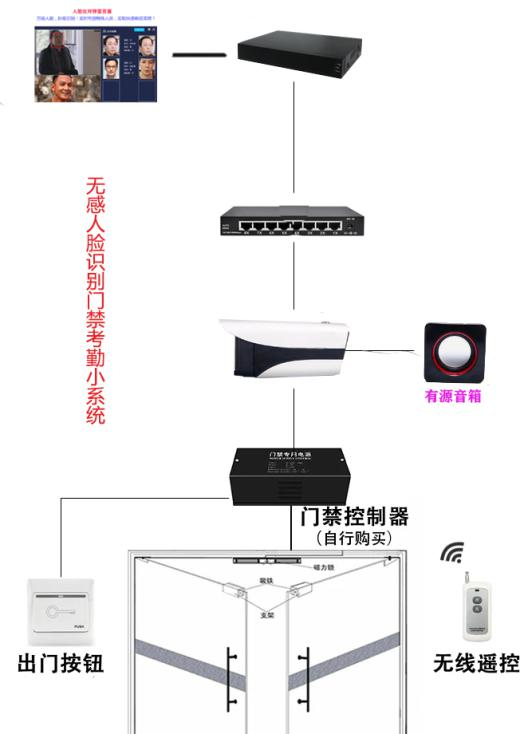
Dans un premier temps, les administrateurs déploient le matériel de base, notamment des caméras, des terminaux de traitement et une base de données sécurisée. Pour optimiser les performances, les entreprises installent souvent Caméras de contrôle des présences faciales Simpo-data aux points d'accès stratégiques : entrées de bureaux, portes de salles de classe, portails d'usines ou halls d'entrée de bâtiments. Ces caméras sont calibrées pour capturer des images faciales nettes dans des conditions d'éclairage variées, de la lumière vive du jour aux environnements intérieurs peu éclairés, jetant ainsi les bases d'une reconnaissance précise.
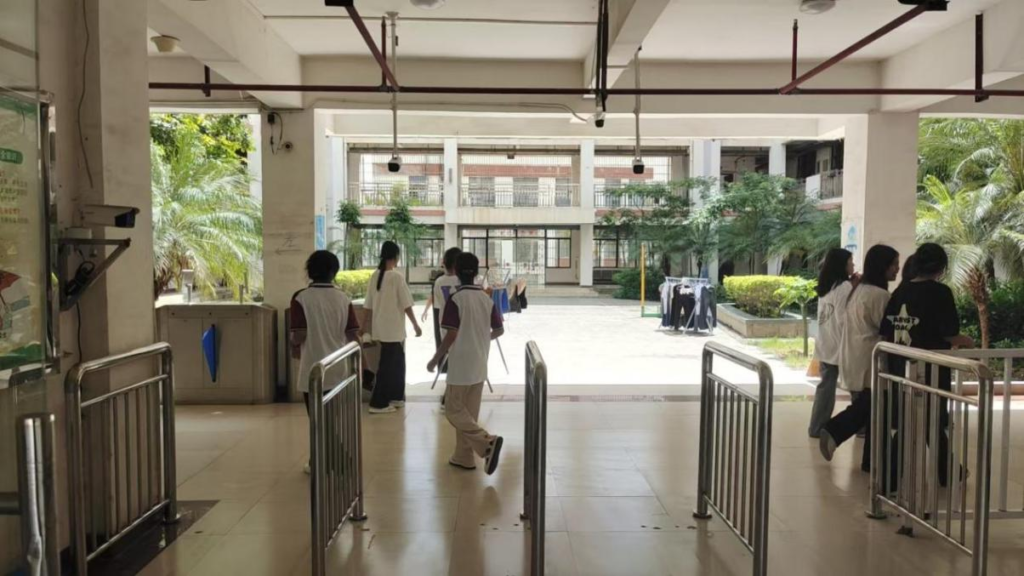
Vient ensuite l’enregistrement des utilisateurs. Chaque employé ou étudiant enregistre ses données faciales en se plaçant devant la caméra. Le système capture plusieurs images du visage sous différents angles — de face, légèrement vers la gauche et légèrement vers la droite — afin de constituer un profil biométrique complet. Au cours de ce processus, le système ne stocke pas les photos faciales brutes ; il convertit plutôt les traits faciaux uniques (tels que la distance entre les yeux, la forme de l’arête nasale, les contours de la mâchoire et la structure des pommettes) en modèles mathématiques cryptés. Ces modèles sont propres à chaque individu et ne peuvent pas faire l’objet d’une ingénierie inverse permettant de reconstituer les images faciales d’origine, ce qui garantit la confidentialité et la sécurité des données.
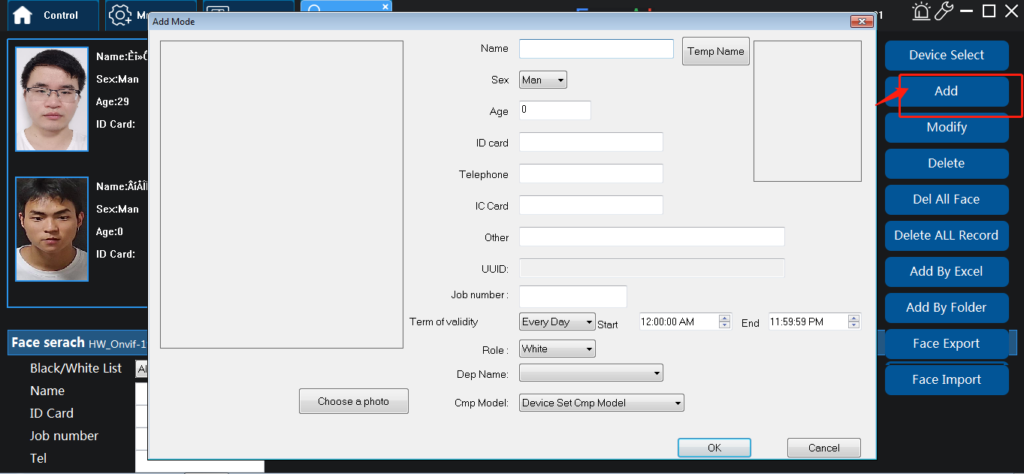
Une fois l'inscription terminée, tous les modèles faciaux cryptés sont stockés dans une base de données centralisée, locale ou dans le cloud, et associés à l'identifiant unique, au nom et à d'autres informations de base de chaque utilisateur. Cette base de données est cryptée de manière sécurisée afin d'empêcher tout accès non autorisé, conformément aux réglementations internationales en matière de protection des données.
2. Capture faciale en temps réel : la première étape de la vérification des présences
Lorsqu'un utilisateur enregistré s'approche du point de contrôle des présences, le système de reconnaissance faciale se met en marche et commence par capturer l'image du visage en temps réel.
Caméras de contrôle des présences faciales Simpo-data fonctionnent en continu en mode veille, prêtes à détecter les visages humains dans leur champ de vision. Dès que l’utilisateur entre dans la zone de capture effective, la caméra prend instantanément des images haute résolution ou de courtes séquences vidéo de son visage. Ce processus est entièrement sans contact et prend moins d’une seconde ; il n’y a donc ni attente ni perturbation des trajets quotidiens : les utilisateurs peuvent franchir le point d’entrée normalement, sans s’arrêter ni toucher aucun appareil.
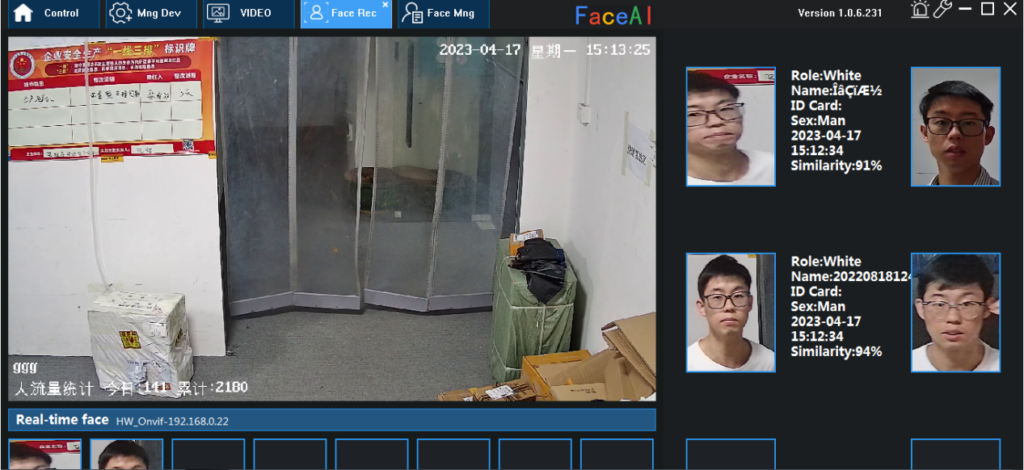
Contrairement aux webcams classiques, ces caméras spécialisées dans la gestion des présences sont équipées de capteurs optiques avancés qui réduisent les reflets, le flou et la distorsion. Elles s'adaptent à la taille des utilisateurs, aux mouvements de la tête et aux légères variations d'angle, garantissant ainsi que les données faciales capturées sont nettes et exploitables pour un traitement ultérieur. Grâce à cette grande adaptabilité, le système est particulièrement adapté aux zones à forte fréquentation où les utilisateurs se déplacent rapidement.
3. Détection des visages et prétraitement des images : optimisation des données pour une meilleure précision
Une fois l'image brute du visage capturée, le système passe à la détection des visages et au prétraitement de l'image, deux étapes essentielles pour filtrer et optimiser les données d'entrée.
Les algorithmes de détection des visages (tels que la cascade de Haar, le HOG ou les modèles CNN basés sur l'apprentissage profond) analysent l'image capturée afin de localiser et d'isoler le visage humain de l'arrière-plan. Le système distingue le visage des autres objets — tels que les murs, les meubles ou d’autres personnes — et recadre la zone du visage afin de la traiter de manière ciblée. Cette étape garantit que seules les données faciales valides sont analysées, évitant ainsi toute interférence provenant d’informations visuelles non pertinentes.
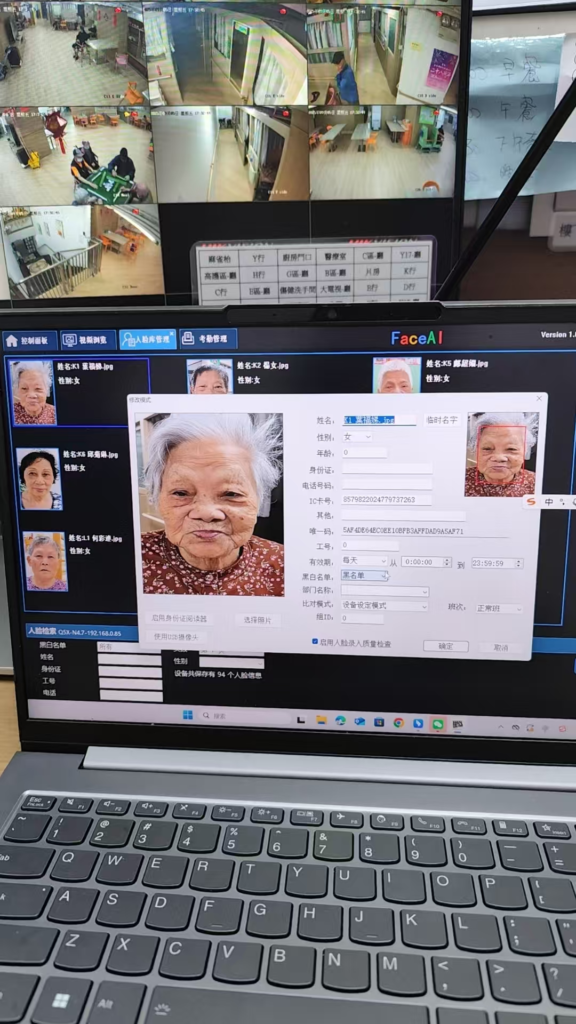
Ensuite, le prétraitement de l'image permet d'améliorer la qualité de l'image du visage recadrée. Le système ajuste la luminosité, le contraste et la netteté pour corriger un mauvais éclairage, aligne le visage sur une position standard afin de compenser l'inclinaison de la tête et supprime le bruit de l'image. Cette optimisation est essentielle pour maintenir la précision de la reconnaissance, en particulier dans des environnements difficiles tels que des couloirs mal éclairés ou des entrées extérieures. Grâce à l'imagerie de haute qualité de Caméras de contrôle des présences faciales Simpo-data, l'étape de prétraitement est plus efficace et ne nécessite que des ajustements minimes pour obtenir des données faciales optimales.
4. Extraction des caractéristiques faciales : création de signatures biométriques uniques
Une fois l'image prétraitée, le système procède à l'extraction des traits du visage — l'étape technique essentielle qui permet de transformer le visage en une signature numérique unique.
Grâce à des algorithmes avancés d’IA et d’apprentissage profond, le système analyse des dizaines de repères faciaux fixes (également appelés « points caractéristiques clés ») sur le visage. Ces repères comprennent les coins des yeux, le bout du nez, les commissures des lèvres et la ligne de la mâchoire. L'algorithme calcule la distance relative, l'angle et les proportions entre ces repères, générant ainsi un vecteur mathématique unique de 128 ou 256 dimensions, appelé « embedding facial ».
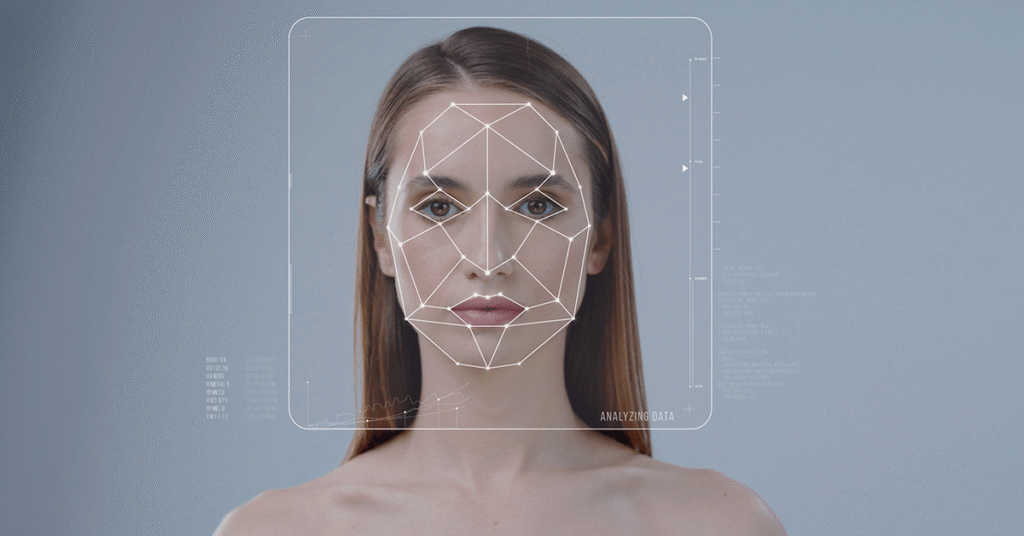
Cette représentation vectorielle du visage constitue un identifiant biométrique unique, à l'instar d'une empreinte digitale, et il n'existe pas deux individus présentant des vecteurs de traits faciaux identiques. Le processus d'extraction s'effectue en quelques millisecondes, ce qui permet un traitement en temps réel, même aux heures de forte affluence. Le système utilise uniquement ce vecteur mathématique pour la reconnaissance, et jamais l'image d'origine, ce qui renforce encore la protection de la vie privée biométrique des utilisateurs.
5. Reconnaissance faciale et vérification d'identité
Le vecteur de caractéristiques faciales extrait est ensuite transmis à la base de données du système en vue de la comparaison des visages et de la vérification d'identité.
Le système compare le vecteur de caractéristiques capturé en temps réel à l'ensemble des modèles faciaux cryptés stockés dans la base de données lors de l'enregistrement. À l’aide d’algorithmes sophistiqués de calcul de similarité, il évalue le score de correspondance entre les données en temps réel et chaque modèle stocké. Si le score de correspondance dépasse un seuil de sécurité prédéfini (généralement supérieur à 95% pour une haute précision), le système confirme l’identité de l’utilisateur.
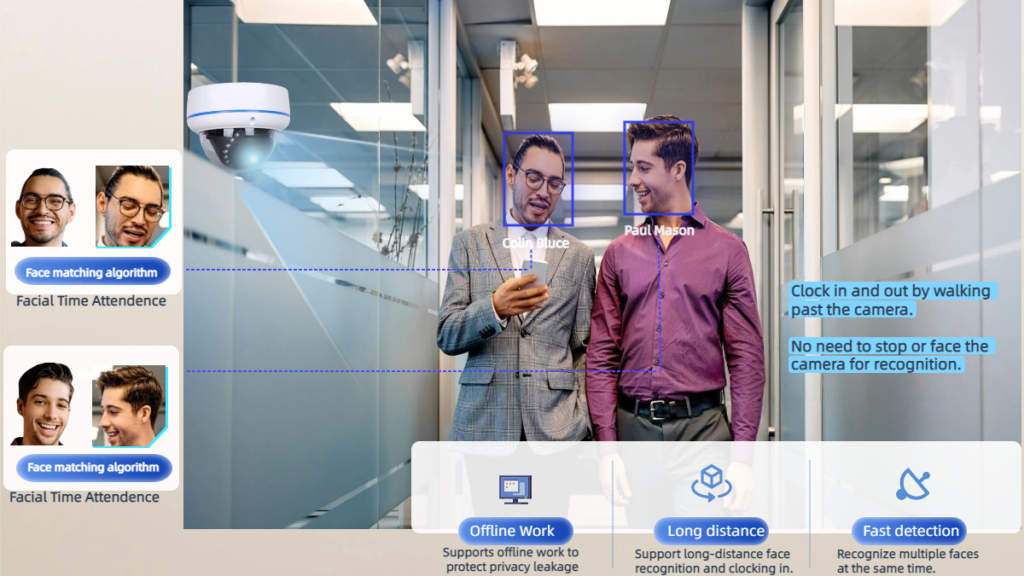
Afin d’empêcher l’usurpation d’identité et la présence par procuration — comme l’utilisation de photos, de vidéos ou de masques pour tromper le système —, la plupart des systèmes modernes de pointage par reconnaissance faciale intègrent une fonction de détection de vie. Cette technologie vérifie la présence de signes distinctifs propres à un visage humain vivant, tels que les clignements des yeux, les légers mouvements faciaux ou la circulation sanguine, garantissant ainsi que le visage scanné appartient bien à une personne vivante. Cette fonctionnalité anti-usurpation, associée à l’imagerie fiable de Caméras de contrôle des présences faciales Simpo-data, ce qui rend le système extrêmement sûr et résistant à la fraude.
6. Enregistrement des présences et gestion des données
Une fois la vérification d'identité effectuée, le système enregistre automatiquement et instantanément les informations de présence de l'utilisateur.
Le système enregistre l'identifiant de l'utilisateur, son nom, l'heure exacte d'arrivée ou de départ, ainsi que l'emplacement du point de contrôle de présence. Ces données sont stockées en temps réel dans la base de données, ce qui permet de créer un registre de présence permanent et inviolable. Les administrateurs n’ont pas besoin de saisir ni de trier manuellement les données ; le système met à jour automatiquement les registres de présence, éliminant ainsi les erreurs humaines et les incohérences dans les données.
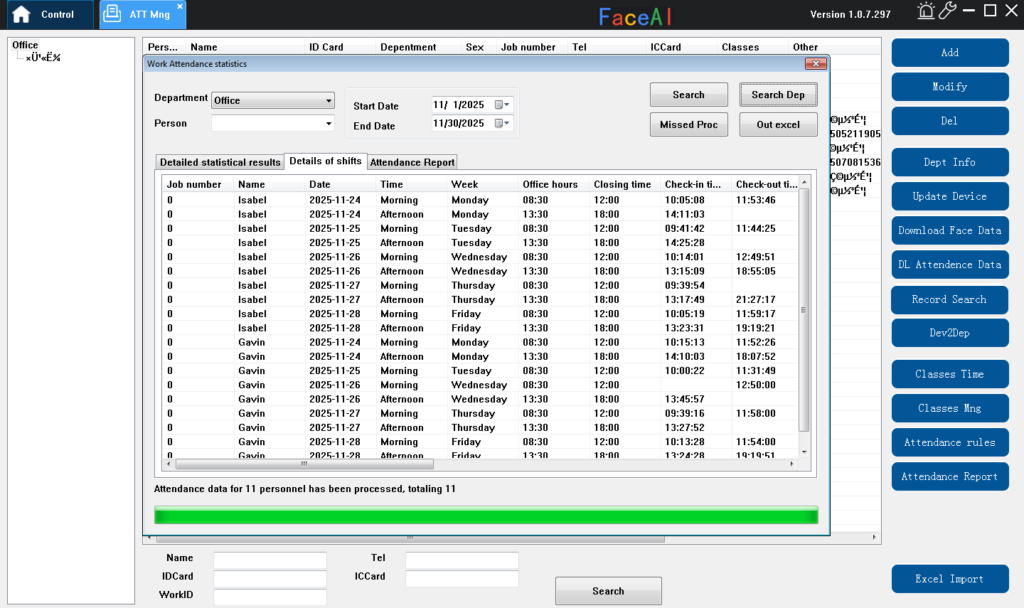
Pour les utilisateurs, l'ensemble du processus s'effectue en moins d'une seconde, ce qui rend la prise de présence plus rapide et plus pratique que jamais. Il n'est plus nécessaire d'avoir sur soi une carte d'identité, de mémoriser des mots de passe ni de toucher des appareils partagés, ce qui améliore l'hygiène et l'expérience utilisateur.
7. Communication des données et intégration des systèmes
Au-delà du simple enregistrement des présences, les systèmes de gestion des présences par reconnaissance faciale offrent de puissantes fonctionnalités de gestion et d'intégration des données.
Les administrateurs ont accès à un tableau de bord convivial qui leur permet de consulter des rapports de présence en temps réel, de générer des récapitulatifs quotidiens, hebdomadaires ou mensuels, de suivre les retards, les départs anticipés et les absences, et d'exporter les données au format Excel ou PDF. Cette gestion centralisée des données permet d'économiser un temps considérable en tâches administratives manuelles et simplifie les contrôles de présence.
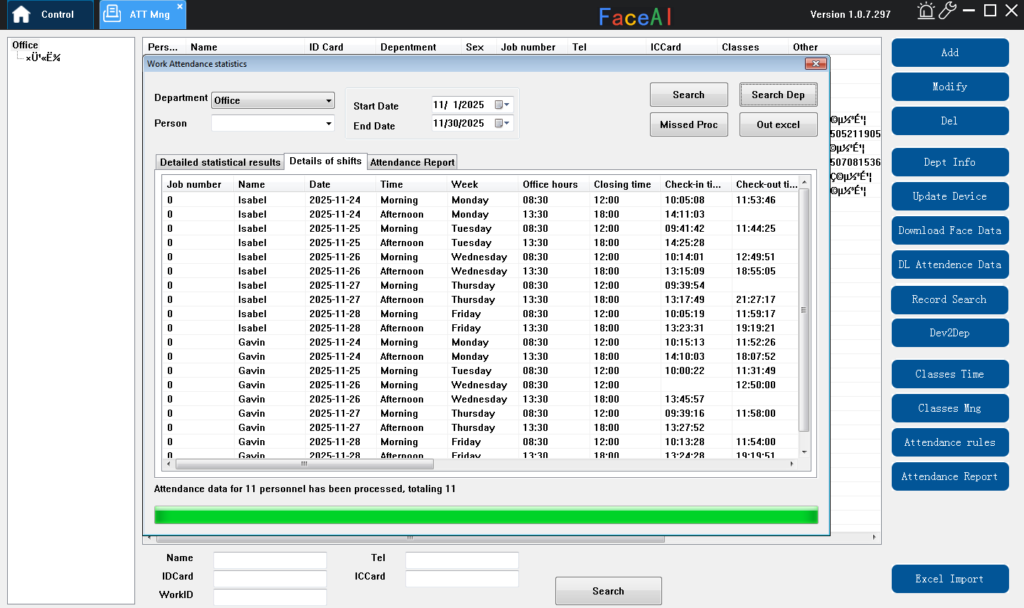
De plus, le système s'intègre parfaitement à d'autres logiciels de gestion, tels que les systèmes de paie des ressources humaines, les systèmes de gestion des campus et les systèmes de contrôle d'accès. Cette intégration permet de créer un écosystème de gestion numérique unifié, dans lequel les données de présence alimentent directement les calculs de paie, le suivi des résultats des étudiants et les autorisations d'accès aux bâtiments. La transmission stable des données de Caméras de contrôle des présences faciales Simpo-data garantit une intégration fluide et un flux de données ininterrompu entre les systèmes.
8. Maintenance du système et optimisation continue
Pour garantir des performances stables à long terme, le système de reconnaissance faciale nécessite un entretien régulier et une optimisation continue de ses algorithmes.
Les algorithmes d'intelligence artificielle du système apprennent de manière autonome et s'adaptent aux légères modifications des traits du visage des utilisateurs au fil du temps, telles que les changements de coiffure, le port de lunettes ou le vieillissement naturel, de sorte que la précision de la reconnaissance ne diminue pas. Les administrateurs n'ont qu'à effectuer des contrôles de routine sur les caméras et la base de données pour garantir un fonctionnement sans heurts.
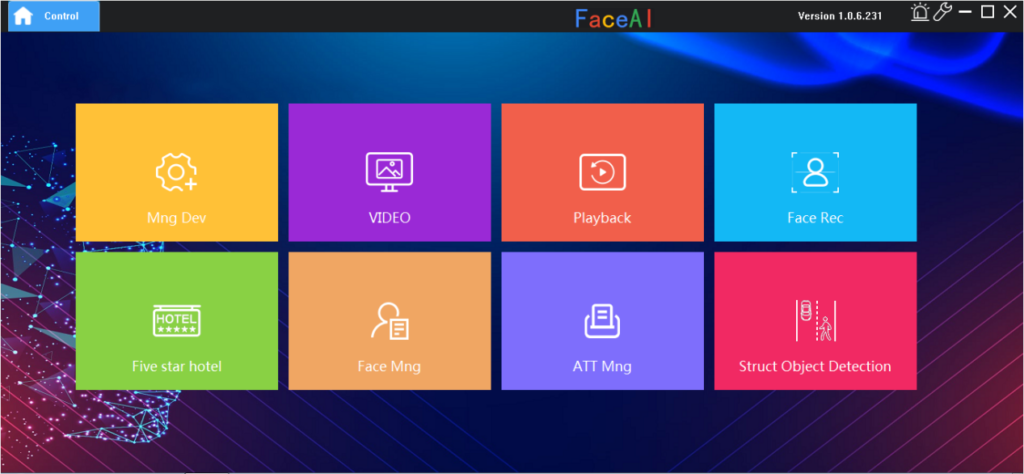
Un nettoyage régulier de Caméras de contrôle des présences faciales Simpo-data garantit une qualité d'image constante, tandis que les sauvegardes de la base de données préviennent toute perte de données. Grâce à sa conception nécessitant peu de maintenance, ce système constitue un choix économique pour les organisations de toutes tailles, des petits bureaux aux grands établissements scolaires en passant par les campus d'entreprises.
Conclusion
Les systèmes de gestion des présences par reconnaissance faciale ont révolutionné la gestion des présences en associant une technologie biométrique de pointe, des algorithmes d'intelligence artificielle et du matériel fiable tel que Caméras de contrôle des présences faciales Simpo-data. De l'enregistrement des utilisateurs et de la capture du visage en temps réel à l'extraction des traits distinctifs, en passant par la vérification d'identité et l'enregistrement automatique des données, chaque étape est conçue pour garantir efficacité, précision et sécurité. Cette technologie élimine les failles des méthodes traditionnelles de gestion des présences, réduit la charge de travail administratif, empêche les présences par procuration et offre une expérience de gestion plus intelligente et plus fluide.
À mesure que la transformation numérique continue de remodeler les lieux de travail et les établissements d'enseignement, les systèmes de gestion des présences par reconnaissance faciale s'intégreront de plus en plus dans les opérations quotidiennes, offrant une solution évolutive, conviviale et à l'épreuve du temps pour la gestion moderne des présences.
 Français
  English
  Deutsch
  Русский
  Português
  Español
  Italiano
  简体中文
简体中文  हिन्दी
  العربية
  বাংলা
বাংলা  Bahasa Indonesia
  日本語
日本語  Tiếng Việt
  Türkçe
  ไทย
ไทย  فارسی
فارسی  Bahasa Melayu